OIV reveals growing role of re-export hubs in global wine trade

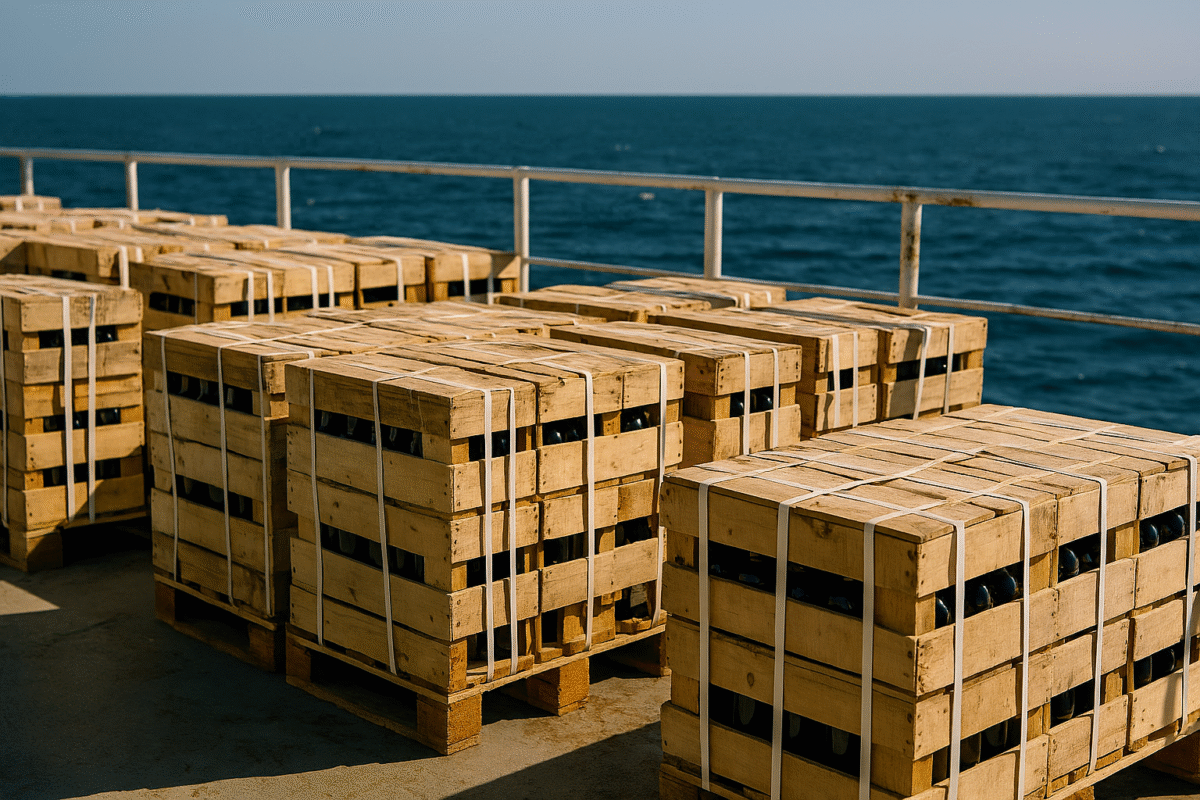
A new report from the International Organisation of Vine and Wine (OIV) shows how re-exportation has become a structural force in the global wine market, shaping trade flows and value creation across continents.

Re-exportation reshaping global wine trade

The OIV’s latest Statistical Thematic Focus 2025, titled “The Global Trade in Wine: Role and Relevance of Re-exportation Hubs”, offers the first comprehensive estimate of global wine re-exports. It finds that re-exportation now represents a key driver in how wines reach new markets and consumers.

What is wine re-exportation?

Traditional wine-producing and exporting countries are typically located around the 40th parallel in both hemispheres. However, some nations export substantial quantities of wine despite producing little to none. This suggests that their wine exports originate from previously imported wine – a practice known as re-exporting.

According to the OECD glossary of statistical terms, “re-exports consist of foreign goods exported in the same state as previously imported, from the free circulation area, premises for inward processing or industrial free zones, directly to the rest of the world and from premises for customs warehousing or commercial free zones, to the rest of the world.”

Between 2018 and 2023, re-exports accounted for around 13% of total wine exports – equivalent to 14 million hectolitres valued at €4.6 billion. The report highlights how this activity supports market access and value creation beyond production, through logistics, bottling, storage and redistribution.

According to the OIV, the global wine trade now represents 47% of world consumption. Traditional European trading centres such as the United Kingdom continue to serve as major redistribution platforms, while new high-value gateways like Singapore have emerged in Asia. The report also points to Canada and Angola as rising regional connectors that are helping to diversify global trade routes.

“Re-exportation reveals the real geography of wine flows,” the OIV notes, “distinguishing between where wines are produced, traded and consumed.”

Global exports show steady long-term growth

Wine exports have grown steadily over the past two decades, with the share of exported wine in total global consumption rising from 5% in 1960 to nearly half by 2024. Since 2000, exports have increased by 4% per year in value, though volume growth has slowed to 2%.

In 2024, non-sparkling bottled wines made up two-thirds of total export value (€24 billion) and just over half of global export volume. Sparkling wines, which account for only 11% of volume, contributed almost a quarter of total value, reflecting their higher average prices. Bulk wines comprised nearly one-third of export volume but only 7% of total value.

Sparkling wines have shown the fastest growth since 2017, with value up 4.8% per year and volume up 3%. Non-sparkling bottled wines have shifted towards premiumisation, with value increasing 3.8% per year between 2009 and 2024 despite flat volumes.

The top three exporters – Italy, Spain and France – together represent 55% of global export volume. The ten largest exporting countries account for 85% of exports, underlining the sector’s high concentration.

A more complex, interconnected market

The OIV concludes that re-exportation has become a “structural element” of the global wine economy, shaping not only how wine moves but how it creates value. As trade routes evolve and new hubs emerge, understanding these flows will be critical for anticipating demand, improving transparency and strengthening market resilience.

The full report, “The Global Trade in Wine: Role and Relevance of Re-exportation Hubs”, is available on the OIV website: www.oiv.int.

Sources: OIV and The Drinks Business
Global Wine Tourism Report 2025: A Comprehensive Analysis of Emerging Trends, Economic Impact, and Sustainability in the Global Wine Tourism Sector

The recently published Global Wine Tourism Report 2025 marks a significant milestone for the international wine and tourism industries. Conducted by Hochschule Geisenheim University in collaboration with UN Tourism, the International Organisation of Vine and Wine (OIV), the Great Wine Capitals Global Network (GWC), and WineTourism.com, this comprehensive study draws on data from 1,310 wineries across 47 countries, providing the most extensive global analysis of wine tourism to date.

According to Professor Gergely Szolnoki, who led the research, the report offers a global perspective on current market conditions, consumer behaviour, and strategic innovation, helping the sector better understand the evolving expectations of wine tourists worldwide.

Over the past decade, wine tourism has become an increasingly dynamic force in the global economy. When effectively managed, it not only drives rural and regional development but also safeguards cultural heritage, environmental sustainability, and community well-being. Despite its rapid growth, the industry has long lacked robust international data, an information gap this report aims to fill through a systematic, evidence-based annual survey.

Key Findings reveal several structural and behavioural trends shaping the future of wine tourism:

Economic Contribution: Wine tourism continues to serve as a critical economic driver, generating significant revenue and employment in local and rural economies.

Profitability: Two out of three wineries report profitability from tourism, accounting for nearly 25% of total revenue.

Sustainability: Environmental and social sustainability are increasingly central to winery strategies, with two-thirds rating them as “important” or “very important.”

Regional Disparities: Europe reports rising visitor numbers, while several overseas regions experience declines, illustrating uneven recovery patterns.

Engagement: One in four wineries which have not yet engaged in wine tourism has already decided to enter the field, and half are considering doing so in the near future.

Demographics: The 45–65 age group remains dominant; however, millennials and younger travellers (25–44) represent a rapidly expanding segment, drawn to experiences combining education, gastronomy, and sustainability.

Challenges: Economic pressures, falling wine consumption, regulations, labour shortages, and digitalization demand adaptive responses.

Core Activities: Tastings, cellar visits, and vineyard tours continue to form the backbone, offering authentic experiences and personal connections.

Trends: Growing demand for authentic, local, culinary, eco-friendly, and nature-based offers, reinforced by strong digital engagement.

Strategies: Innovation is driven by storytelling, social media, food pairings, local partnerships, education, and cultural events.

Innovation & Investment: Wine tourism is widely regarded as essential for competitiveness, although actual investment levels vary.

Outlook: Half of wineries plan further investment, most anticipate growth, and nearly two-thirds see wine tourism as a resilience tool.

The Global Wine Tourism Report 2025 establishes a unique international benchmark, reaffirming wine tourism’s role as a vital catalyst for economic growth, cultural exchange, and sustainable development within the global wine landscape.

The Full report and executive summary are available at:
👉 www.hsgeisenheim.de/gwtreport

Etna Days 2025: Showcasing Etna DOC Wines and Volcanic Terroir

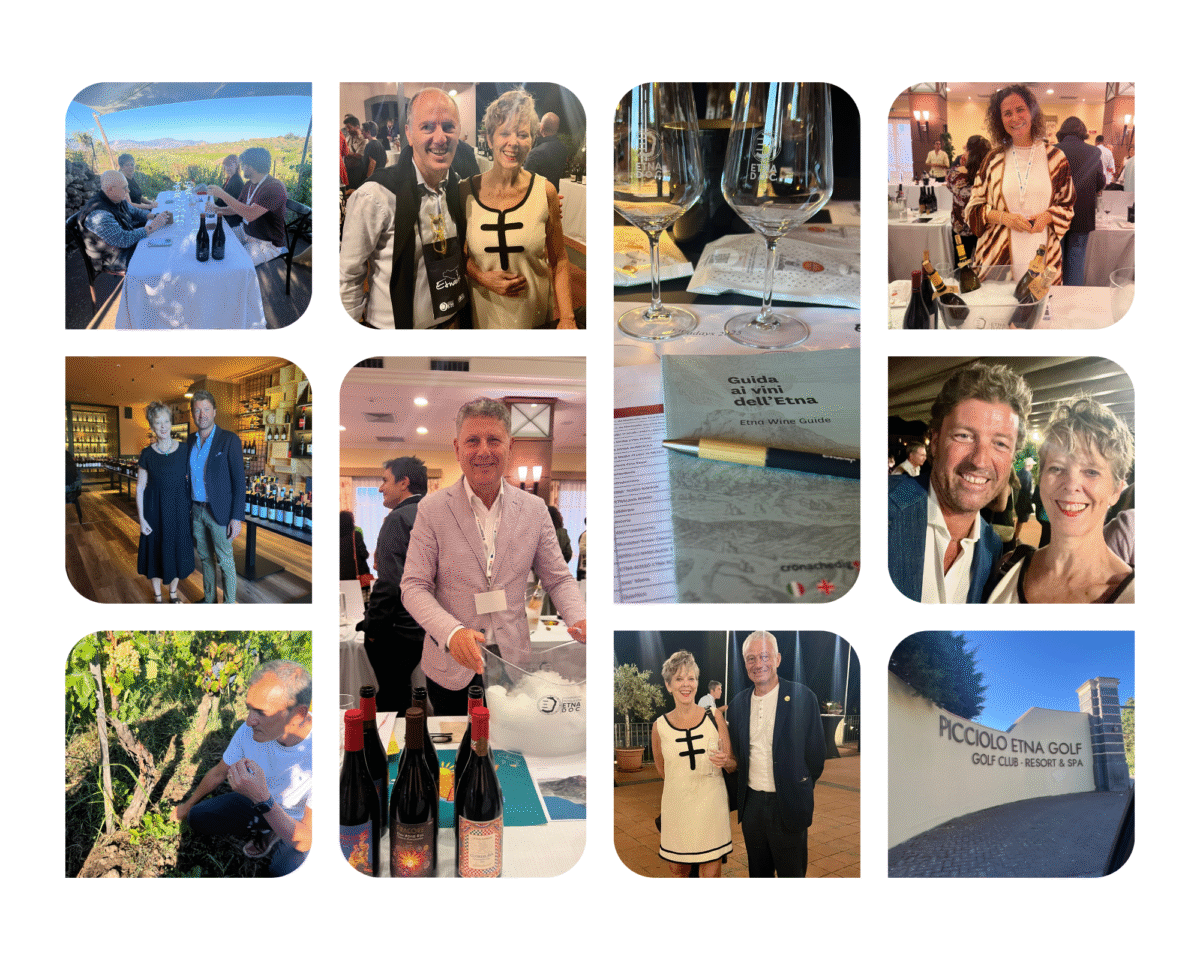
Etna Days 2025 marked a record-breaking edition, celebrating the cultural, environmental, and enological richness of Sicily’s iconic volcano. Hosted at Il Picciolo Golf Resort, Castiglione di Sicilia, the event united global wine professionals for tastings, vineyard visits, and dialogue on the evolution of Etna DOC wines.

This event reinforced Mount Etna as the heart of Sicilian viticulture and a leading European wine region. Held September 18 – 20, it brought together producers, journalists, importers, and wine professionals to explore the terroir, tradition, and innovation shaping Etna DOC. Over ninety wineries showcased the volcano’s diverse microclimates and vineyard districts, highlighting Etna’s expanding global influence.

Francesco Cambria, President of the Consorzio di Tutela Vini Etna DOC, emphasized the event’s deeper purpose: “Etna Days is the culmination of our collective work: over these three days, we want to showcase not just wines, but a cultural heritage and identity that belongs to the volcano’s communities.”

The Venue: Il Picciolo Golf Resort, Castiglione di Sicilia

Nestled among the black lava terraces and verdant vineyards of Etna’s northern slopes, Il Picciolo Golf Resort served as the event’s official venue. Its panoramic setting provided an ideal backdrop for tastings, discussions, and networking. Beyond its picturesque location, the resort represented a synthesis of Sicilian hospitality and the elegance of wine culture; it was a perfect reflection of Etna DOC’s spirit.

Program Highlights: Tastings and Technical Sessions

The program opened with a presentation by the Consorzio, tracing Etna DOC’s historical evolution and strategic direction. This was followed by technical and walk-around tastings showcasing over five hundred Etna DOC wines. From Carricante-based Etna Bianco to Nerello Mascalese-driven Etna Rosso, each wine expressed the minerality, precision, and freshness characteristic of volcanic viticulture.

The tastings served as a critical platform for analysis and exchange, where sommeliers, journalists, and buyers engaged directly with producers to discuss winemaking philosophies, clonal selections, and sustainability practices.

Dining Under the Stars

An unforgettable moment unfolded under the stars at Il Picciolo Golf Resort, where producers, international guests, Management and Jury of the Concours Mondial de Bruxelles all gathered for an evening that celebrated the unity of Etna’s wine community. Local culinary artistry met expressive volcanic wines in a setting illuminated by the night sky and framed by the silhouette of the volcano.

Vineyard and Winery Visits: The Contrade of Etna

The following two days were dedicated to immersive vineyard and winery visits across Etna’s diverse contrade. From centuries-old ungrafted vines to new high-altitude plantings, these excursions revealed the geological and cultural mosaic underpinning Etna’s viticultural identity.

Producers highlighted the challenges of working in such a dynamic environment, ranging from steep slopes to unpredictable volcanic activity, while showcasing innovations in organic farming and micro-vinification. The result was a living laboratory of sustainability, where past and future meet in every glass.

Wineries visited: Benanti, Terra Costantino, Verderame, Terrazze dell’Etna, Bugia Nen, and Murgo.

Etna’s Role as a Global Model

Salvatore Barbagallo, Councillor for Agriculture of the Sicilian Region, described Etna as “a natural laboratory of sustainability and biodiversity.” This year’s event demonstrated how Etna’s producers are redefining quality through ecological awareness and territorial integrity. The initiative, partially supported by the Sicilian Regional Department of Agriculture, illustrated the power of collaboration in promoting regional excellence on an international scale.

Consorzio Director Maurizio Lunetta concluded: “We are recording significant numbers that confirm the international stature of the denomination. The goal for the future is to grow with an integrated vision that goes beyond winemaking, involving hospitality, gastronomy, and typical products.”

Looking Forward To 2026

Looking ahead to Etna Days 2026, the event is poised to further strengthen Etna’s international reputation. The region’s story of resilience, beauty, and innovation continues to unfold, rooted in one of the world’s most remarkable volcanic terroirs.

Great Wine Capitals 2026 Best of Wine Tourism Regional Awards Announces Napa Valley Winners

The regional Napa Valley delegation for the Great Wine Capitals, which includes the County of Napa, Napa Valley Vintners, and Visit Napa Valley, has announced the winners of the 2026 Best of Wine Tourism Regional Awards.

The annual Great Wine Capitals Best of Wine Tourism Awards celebrate innovation and excellence in wine tourism across the world’s leading wine regions. Napa Valley is among 11 global regions recognized internationally by the Great Wine Capitals Network for delivering exceptional wine tourism experiences.

Tourism and hospitality businesses in Napa Valley were invited to self-nominate in one of seven categories during August. Submissions were reviewed and winners selected by a judging panel that included representatives from the County of Napa, Napa Valley Vintners, and Visit Napa Valley.

The Great Wine Capitals 2026 Best of Wine Tourism Regional Award winners, by category, are:

  • Accommodation –  The George
  • Architecture & Landscapes – Cuvaison Winery
  • Art & Culture – Boisset Collection 
  • Innovative Wine Tourism Experiences – Sterling Vineyards 
  • Sustainable Wine Tourism Practices – CHANDON 
  • Culinary Experiences – Clif Family Winery 
  • Wine Tourism Services – Festival Napa Valley 

Last year’s (2025) Napa Valley Regional Award winners included: Dr. Wilkinson’s Backyard Resort & Mineral Springs (Accommodation), Signorello Estate (Architecture & Landscapes),  Rail Arts District (RAD) Napa (Art & Culture), Olabisi Winery (Vine Trail Adventures)  (Innovative Wine Tourism Experiences), Pine Ridge Vineyards (Sustainable Wine Tourism Practices), Oxbow Public Market (Culinary Experiences), Napa Valley Wine Train (Wine Tourism Services). Napa Valley Wine Train went on to receive global recognition as the 2025 Global Winner in the  Wine Tourism Services category.

In addition to being recognized in front of an audience of industry peers, the 2026 regional award winners are now in consideration for the Global Best of Wine Tourism Awards. Global winners will be announced at the Great Wine Capitals Annual General Meeting held in Bordeaux, France, in November 2025.

For further information, visit: https://www.visitnapavalley.com/blog/post/2026-best-of-wine-tourism-award-winners/

European Wine Tourism Index 2025: Ranking Europe’s Leading Wine Destinations

Wine tourism represents one of the fastest-growing segments of global cultural and experiential travel. According to a recent survey by TUI Musement, more than 91% of respondents expressed interest in wine-related travel, with the highest engagement among travellers aged 18 to 44. Responding to this demand, and coinciding with Europe’s harvest season, TUI Musement has introduced the inaugural “European Wine Tourism Index 2025,” the first data-driven ranking of Europe’s most attractive destinations for wine tourism.

Unlike perception-based surveys, the Index employs quantitative data and official registries to assess both viticultural heritage and tourism potential. By combining traditional measures of production with indicators of cultural recognition and international prestige, the Index provides a comparative framework for understanding the evolving dynamics of Europe’s wine tourism map.

Methodology

The Index evaluates European Union member states (with a minimum vineyard area of 500 hectares) across five weighted categories:

Vineyard surface area (20%)

Vineyard land dedicated to PDO and PGI wines (30%)

Number of registered PDO/PGI wines (20%)

Total wine production volume (10%)

International awards received (20%)

Data sources include Eurostat, the International Organisation of Vine and Wine (OIV), official EU registries, and the Decanter World Wine Awards 2025. Scores were calculated using a weighted average, providing an objective reflection of both wine heritage and global recognition.

The Results – Europe’s Top 10 Wine-Producing Countries

  1. France (Score: 85.2/100)

France secures first place with unparalleled prestige, the highest number of international awards, and a vast network of PDO regions.

Key regions: Bordeaux, Burgundy, Champagne

Highlights: Bordeaux’s château tours, Burgundy’s 1,000+ climats (vineyard plots) inscribed by UNESCO, Champagne’s historic underground cellars.

Experiences: Private vintage tastings, vineyard drives through Bordeaux in classic cars, cellar tours beneath Épernay’s Avenue de Champagne.

  1. Italy

Italy ranks second as Europe’s largest wine producer and the continent’s leader in PDO/PGI registrations.

Key regions: Tuscany, Piedmont, Veneto

Highlights: Tuscany’s Chianti and Brunello di Montalcino; Piedmont’s UNESCO-listed Langhe-Roero vineyards; Veneto’s iconic Prosecco hills.

Experiences: Chianti tasting with artisanal oils and balsamic vinegar, Prosecco tours in Veneto, vineyard walks in Monferrato.

  1. Spain

Spain, home to the largest vineyard area in Europe (909,367 hectares), ranks third, with 97% dedicated to PDO/PGI wines.

Key regions: La Rioja, Ribera del Duero, Rías Baixas, Jerez

Highlights: Ribera del Duero’s bold reds, volcanic viticulture in Lanzarote’s La Geria, and cava production in Penedès.

Experiences: La Rioja winery tours, sherry tasting in Jerez, vineyard hikes across volcanic landscapes.

  1. Portugal

Portugal earns fourth place through its internationally awarded wines and unique terroirs.

Key regions: Douro Valley, Alentejo, Vinho Verde

Highlights: UNESCO-listed Douro terraces, Alentejo’s bold red wines, crisp whites of Vinho Verde.

Experiences: River cruises with quinta tastings, traditional Algarve wine trails, and immersive tours of fortified Port cellars.

  1. Greece

Greece combines millennia-old heritage with an extraordinary diversity of indigenous grape varieties.

Key regions: Macedonia, Peloponnese, Santorini

Highlights: Assyrtiko from Santorini’s volcanic soils, Agiorgitiko from Nemea, and Xinómavro from northern Macedonia.

Experiences: Sunset tastings in Santorini, Peloponnesian winery tours, Crete’s wine-and-food pairings.

  1. Germany

Germany places sixth, globally celebrated for its Rieslings and scenic river-valley vineyards.

Key regions: Mosel, Rheingau, Pfalz

Highlights: Steep Mosel slopes, Rheingau’s historic Spätlese birthplace, Palatinate’s iconic Bad Dürkheim wine barrel.

Experiences: Vineyard cycling tours, river cruises with Riesling tastings, heritage wine festivals.

  1. Romania

Romania ranks seventh, drawing on deep winemaking traditions dating to antiquity.

Key regions: Transylvania, Muntenia (Dealu Mare), Dobrogea

Highlights: Fetească varietals of Transylvania, powerful reds from Dealu Mare (“Romania’s Tuscany”), and sweet wines from Dobrogea.

Experiences: Castle-linked vineyard visits, Black Sea coastal tastings, immersive food-and-wine tours from Bucharest.

  1. Hungary

Hungary, in eighth place, is synonymous with sweet wines of global renown and increasingly recognized reds.

Key regions: Tokaj, Eger, Villány

Highlights: Tokaji Aszú (UNESCO World Heritage), Eger’s “Bull’s Blood” (Bikavér), Villány’s full-bodied reds.

Experiences: Cellar visits in Tokaj, historic vineyard tours, and urban wine tastings in Budapest.

  1. Austria

Austria’s 46,000 hectares of PDO vineyards demonstrate exceptional quality control.

Key regions: Wachau Valley, Burgenland, Vienna

Highlights: Wachau’s UNESCO terraced landscapes, Grüner Veltliner and Riesling, and Vienna as Europe’s only capital city with significant vineyards.

Experiences: Danube wine cruises, half-day vineyard tours from Vienna, Burgenland’s botrytized dessert wines.

  1. Bulgaria

Bulgaria completes the top 10 with a wine history dating to ancient Thrace.

Key regions: Thracian Valley, Struma Valley, Danube Plain

Highlights: Mavrud-based reds, Mediterranean-influenced wines of Struma, and fresh Danubian whites.

Experiences: Vineyard tours of Nessebar, tastings in the Thracian Valley, and Black Sea wine routes.

The inaugural European Wine Tourism Index 2025 reaffirms Europe’s enduring role as the global centre of wine tourism. While traditional powers such as France, Italy, and Spain remain dominant, the emergence of destinations like Romania, Hungary, Austria, and Bulgaria signals an expanding and diversifying wine tourism map.

This Index provides both travellers and industry stakeholders with an authoritative framework for understanding Europe’s viticultural landscape, linking heritage with tourism potential, and mapping future opportunities for sustainable growth.